
Chapter 7: Probability
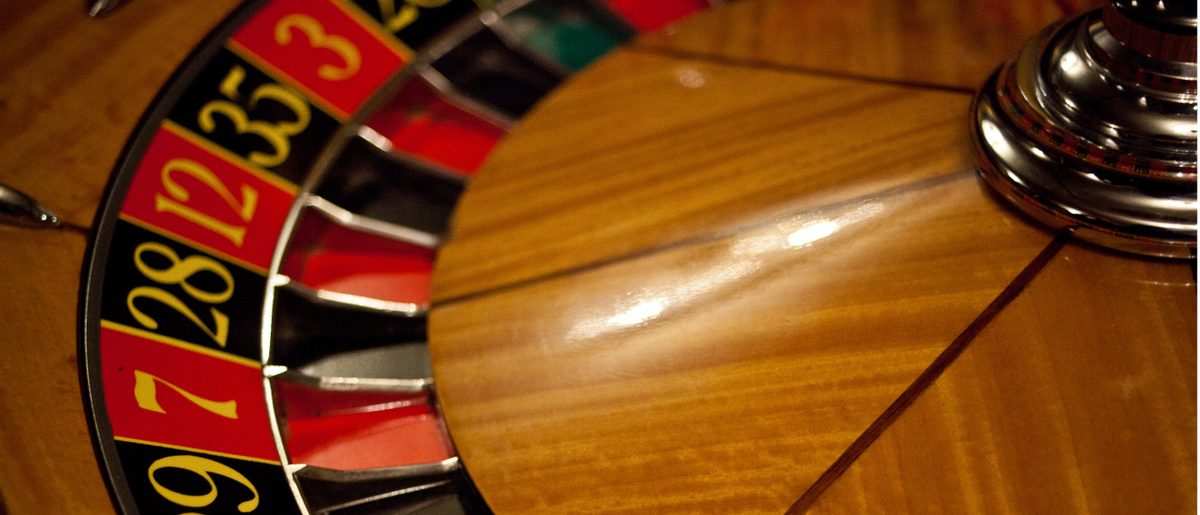
Casinos are big business; according to the American Gaming Association, commercial casinos in the United States brought in over $43 billion in revenue in 2019. Casinos must walk a fine line in order to be profitable. Their customers must lose more money than they win, on average, in order to stay in business. But if the chances of a single customer winning more money than they lose is too small, people will stop coming in the door to play the games.
In this chapter, we'll study the techniques a casino must use to determine how likely it is that a customer will win a particular game, and then how the casino decides how much money a winner will rake in so that the customers are happy, but the casino also turns a profit in the long run. In order to figure out those likelihoods, we have to be able to somehow consider every possible outcome of these games. For example, in a game that involves players receiving 5 cards from a deck of 52, there are 2,598,960 possibilities for each player. We'll start off this chapter by learning how to count those possible outcomes.
Adapted from Contemporary Mathematics by OpenStax (openstax.org), licensed under CC BY-NC-SA 4.0. Changes were made. License: CC-BY-NC-SA-4.0.