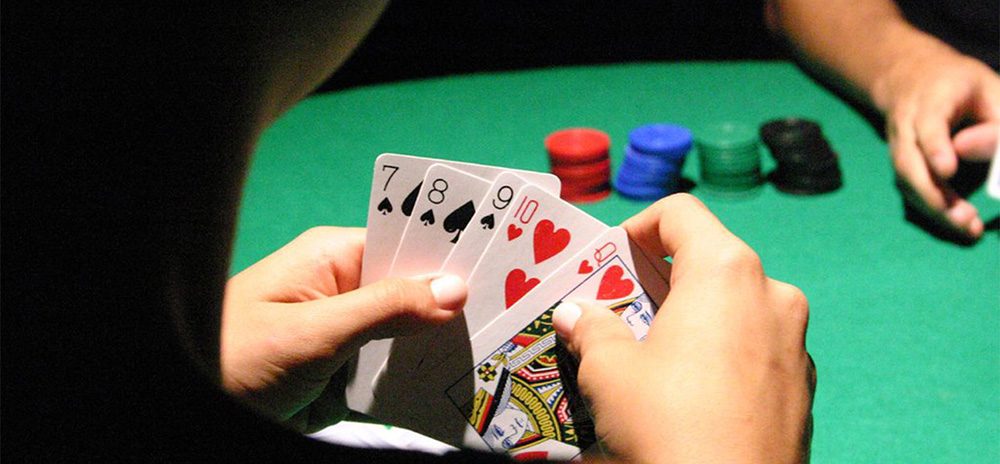
Figure 7.8Combinations help us count things like the number of possible card hands, when the order in which the cards were drawn doesn’t matter.Combinations help us count things like the number of possible card hands, when the order in which the cards were drawn doesn’t matter. (credit: “IMG_3177” by Zanaca/Flickr, CC BY 2.0)
Learning Objectives
After completing this section, you should be able to:
Distinguish between permutation and combination uses.
Compute combinations.
Apply combinations to solve applications.
In Permutations, we studied permutations, which we use to count the number of ways to generate an ordered list of a given length from a group of objects. An important property of permutations is that the order of the list matters: The results of a race and the selection of club officers are examples of lists where the order is important. In other situations, the order is not important. For example, in most card games where a player receives a hand of cards, the order in which the cards are received is irrelevant; in fact, players often rearrange the cards in a way that helps them keep the cards organized.
Combinations: When Order Doesn’t Matter
In situations in which the order of a list of objects doesn’t matter, the lists are no longer permutations. Instead, we call them combinations.
Counting Combinations
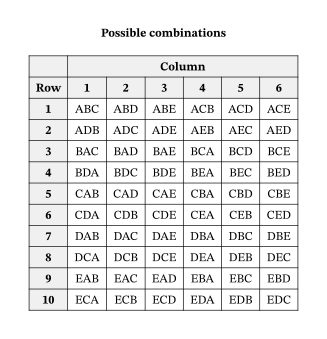
Permutations and combinations are certainly related, because they both involve choosing a subset of a large group. Let’s explore that connection, so that we can figure out how to use what we know about permutations to help us count combinations. We’ll take a basic example. How many ways can we select 3 letters from the group A, B, C, D, and E? If order matters, that number is . That’s small enough that we can list them all out in the table below.
ABC
ABD
ABE
ACB
ACD
ACE
ADB
ADC
ADE
AEB
AEC
AED
BAC
BAD
BAE
BCA
BCD
BCE
BDA
BDC
BDE
BEA
BEC
BED
CAB
CAD
CAE
CBA
CBD
CBE
CDA
CDB
CDE
CEA
CEB
CED
DCA
DAC
DAE
DBA
DBC
DBE
DCA
DCB
DCE
DEA
DEB
DEC
EAB
EAC
EAD
EBA
EBC
EBD
ECA
ECB
ECD
EDA
EDB
EDC
Now, let’s look back at that list and color-code it so that groupings of the same 3 letters get the same color, as shown in Figure 7.9:
Figure 7.9
After color-coding, we see that the 60 cells can be seen as 10 groups (colors) of 6. That’s no coincidence! We’ve already seen how to compute the number of permutations using the formula To compute the number of combinations, let’s count them another way using the Multiplication Rule for Counting. We’ll do this in two steps:
Step 1: Choose 3 letters (paying no attention to order).
Step 2: Put those letters in order.
The number of ways to choose 3 letters from this group of 5 (A, B, C, D, E) is the number of combinations we’re looking for; let’s call that number (read “the number of combinations of 5 objects taken 3 at a time”). We can see from our chart that this is ten (the number of colors used). We can generalize our findings this way: remember that the number of permutations of things taken at a time is . That number is also equal to , and so it must be the case that . Dividing both sides of that equation by gives us the formula below.
Key Terms
combination
Key Concepts
Permutations are used to count subsets when order matters; combinations work when order doesn't matter.
Combinations can also be computed using factorials.
Formulas
The formula for counting combinations is:
Adapted from Contemporary Mathematics by OpenStax (openstax.org), licensed under CC BY-NC-SA 4.0. Changes were made. License: CC-BY-NC-SA-4.0.
These eBooks are a prerelease and are not yet certified conformant with WCAG 2.1 AA or ADA Title II. Every page is built against an automated accessibility gate, and the published editions will meet ADA Title II requirements when they release in late September 2026. If something is unusable, please tell us.