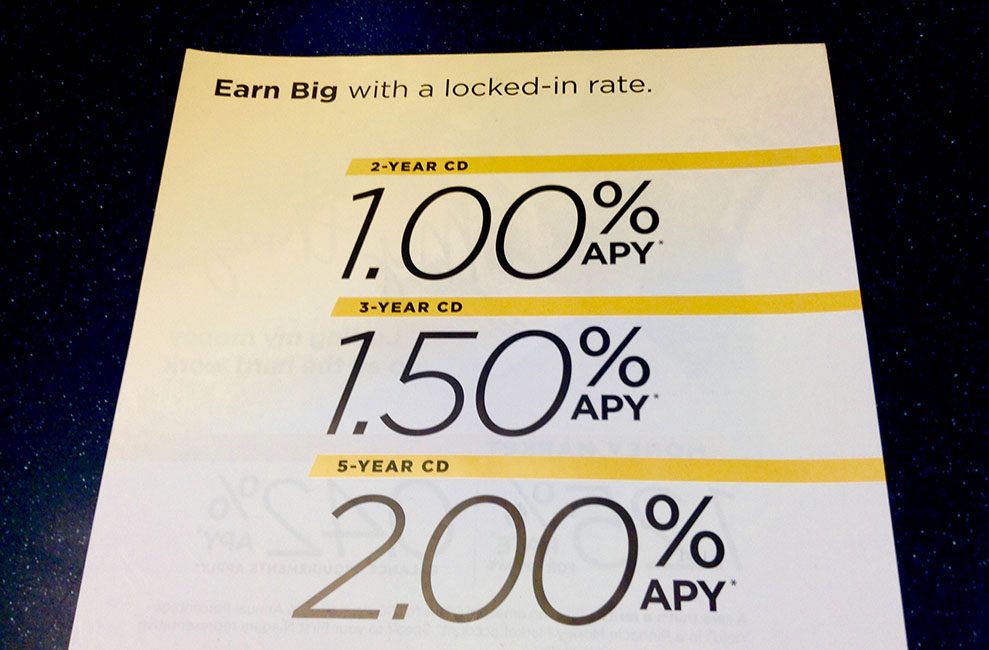
Figure 6.4Interest is how savings earns money.Interest is how savings earns money. (credit: “Interest Rates” by Mike Mozart/Flickr, CC BY 2.0)
Learning Objectives
After completing this section, you should be able to:
Compute simple interest.
Understand and compute future value.
Compute simple interest loans with partial payments.
Understand and compute present value.
There is truth in the phrase “You need to have money to make money.” In essence, if you have money to lend, you can lend it at a cost to a borrower and make money on that transaction.
When money is borrowed, the person borrowing the money (borrower) typically has to pay the person or entity that lent the money (the lender) more than the amount of money that was borrowed. This extra money is the interest that is to be paid. Interest is sometimes referred to as the cost to borrow, the cost of the loan, or the finance cost.
This idea also applies when someone deposits money in a bank account or some other form of investment. That person is essentially lending the money to the bank or company. The money earned by the depositor is also called interest. The interest is typically based on the amount borrowed, or the principal.
The pairing of borrower and lender can take various forms. The borrower may be a consumer using a credit card or taking out a loan from a bank, the lender. Companies also borrow from lending banks. Someone who invests in a company’s stock is the lender in this case; the company is essentially the borrower.
In this section, we examine the basic building block of interest paid on loans and borrowed credit and also the returns on investments like bank accounts, simple interest.
Compute Simple Interest
Let’s get some terminology understood. Interest to be paid by a borrower is often expressed as an annual percentage rate, which is the percent of the principal that is paid as interest for each year the money is borrowed. This means that the more that is borrowed, the more that must be paid back. Sometimes, the interest to be paid back is simple interest, which means that the interest is calculated on the amount borrowed only.
The length of time until the loan must be paid off is the term of the loan. The date when the loan must be paid off is when the loan is due. The day that the loan is issued is the origination date. We’ll put this terminology to use in the following examples. Note that in this section we will use letters, called variables, to represent the different parts of the formulas we’ll be using. This will help keep our formulas and calculations manageable.
Simple Interest Loans with Integer Year Terms
Calculating simple interest is similar to the percent calculations we made in Understanding Percent and Discounts, Markups, and Sales Tax, but must be multiplied by the term of the loan (in years, if dealing with an annual percentage rate).
When the annual interest rate, the principal, and the number of years that the money is borrowed is known, the interest to be paid can be found and from there the total to be repaid can be calculated.
Simple Interest Loans with Other Lengths of Terms
In the previous example and Your Turn exercise, the loans were paid back in one payment after an integer number of years. However, there are also loans lasting a length of time not equal to an integer number of years (like 1, 2, or 3 years or more), but in a number of months (like 4 months, 18 months, and so on). What model would apply to these situations?
When the loan is paid back after a term that is not an integer number of years but is instead a number of months, the term of the loan, or time, , is expressed as a fraction of the year. So for a 2-month loan, the time, in years, is 2/12 = 1/6. For a 5-month loan, the time in years is 5/12. For an 18-month term, the term in years is 18/12 = 1.5.
Those examples dealt in months. However, some loans are for days only (45 days, 60 days, 120 days). In such cases, we find the daily interest rate. The fraction we will use for the daily interest rate is the interest rate (as a decimal) divided by 365. This may be referred to as Actual/365. In order to find the term of the loan, divide the number of days in the term of the loan by 365.
Understand and Compute Future Value
Money can be invested for a specific amount of time and earn simple interest while invested. The terminology and calculations are the same as we’ve already seen. However, instead of the total to be paid back, the investor is interested in the total value of the investment after the interest is added. This is called the future value of the investment.
You may have noticed that for these problems, the future value was rounded down. When the future value is paid, the amount is typically rounded down.
A certificate of deposit (CD) is a savings account that holds a single deposit (the principal) for a fixed term at a fixed interest rate. Once the term of the CD is over, the CD may be redeemed (cashed in or withdrawn) and the owner of the CD receives the original principal plus the interest earned. The deposit often cannot be withdrawn until the term is up; if it can be withdrawn early, there is often a penalty imposed to do so.
Paying Simple Interest Loans with Partial Payments
In every example above, there was one payment for the loan, or one withdrawal for the investment. However, for many loans (house, car, in-ground swimming pool), the loan will be paid back in two or more payments. Such a payment is called a partial payment, because they only pay off part of the loan.
When a partial payment is made, some of the payment pays for the principal, but the rest of the payment pays for interest on the principal. When making the first partial payment, the interest is calculated on the principal for the time between the origination date of the loan and the date of the payment. If another partial payment is made, the interest is calculated based on the remaining principal and the time between the previous partial payment and the current partial payment date.
Remaining Balance
The previous examples demonstrated how to determine the interest paid in a partial payment. Using this, we can determine the remaining balance after a partial payment.
Step 1: determine the amount of the payment, , that is applied to interest, .
Step 2: subtract the amount paid in interest from the payment, . This is the amount applied to the balance.
Step 3: subtract the amount applied to the balance (the value obtained in Step 2) from the balance of the loan, . This is the remaining balance after the partial payment.
Loan Payoff
Finally, we will determine the amount to be paid at the end of the loan. To do so, we apply the formula for the loan payoff to the remaining balance. However, the length of time for that remaining balance is the time between the partial payment and the day the loan is paid off.
Step 1: Determine the remaining balance after the partial payment.
Step 2: Calculate the number of days between the partial payment and the date the loan is paid off. This will be the time in the payment formula.
Step 3: Calculate the amount to be paid at the end of the loan, or the payoff amount, using , where is the remaining balance and is the time found in Step 2.
Repeated Partial Payments
Car loans and mortgages (loans for homes) are paid off through repeated partial payments, most often monthly payments. Since car loans are often 3 to 6 years, and mortgages 15 to 30 years, calculating each individual monthly payment one at a time is time consuming and tedious. Even a 3-year loan would involve applying the above steps 36 times! Fortunately, there is a formula for determining the amount of each partial payment for monthly payments on a simple interest loan.
Understand and Compute Present Value for Simple Interest Investments
When finding the future value of an investment, we know how much is deposited, but we have no idea how much that money will be worth in the future. If we set a goal for the future, it would be useful to know how much to deposit now so an account reaches the goal. The amount that needs to be deposited now to hit a goal in the future is called the present value.
Understanding what this tells you is important. When you find the present value, that is how much you need to invest now to reach the goal , under the conditions (time and rate) at which the money will be invested.
Key Terms
Interest
Principal
Annual percentage rate
Simple interest
Term
Due
Origination date
Payoff amount
Future value
Partial payment
Present value
Key Concepts
Interest is money that is paid by a borrower for the privilege of borrowing the money.
Simple interest is computed by substituting the principal, interest rate, and number of years into the formula
The payoff for a loan is the amount of principal remaining on a loan plus the interest that accumulated on the loan since the last payment.
The future value of an investment yielding simple interest is the original principal plus the interest earned on the investment.
When making a partial payment, some of the payment pays off all the accumulated interest, while the remainder of the payment is applied to the principal of the loan.
Finding the present value of an investment is used to determine how much should be invested now in order to achieve a specific goal.
Formulas
Adapted from Contemporary Mathematics by OpenStax (openstax.org), licensed under CC BY-NC-SA 4.0. Changes were made. License: CC-BY-NC-SA-4.0.
These eBooks are a prerelease and are not yet certified conformant with WCAG 2.1 AA or ADA Title II. Every page is built against an automated accessibility gate, and the published editions will meet ADA Title II requirements when they release in late September 2026. If something is unusable, please tell us.