
7.1 Introduction to Conics
In this chapter, we study the Conic Sections - literally `sections of a cone'. Imagine a double-napped cone as seen below being `sliced' by a plane.
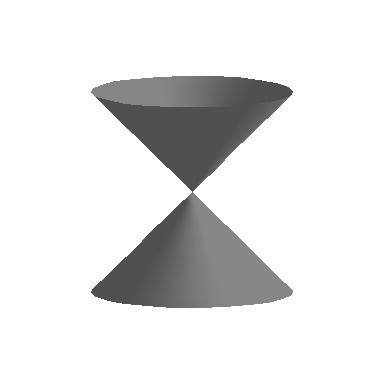
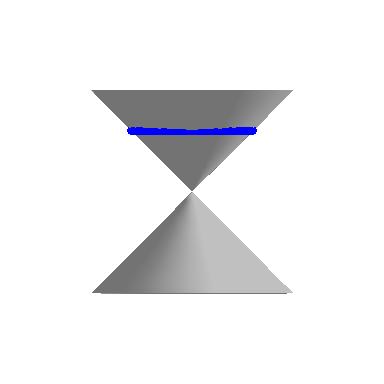
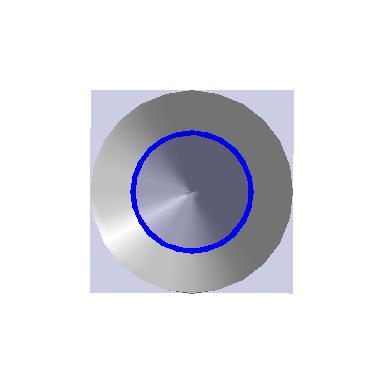
If we slice the cone with a horizontal plane the resulting curve is a circle.
Tilting the plane ever so slightly produces an ellipse.
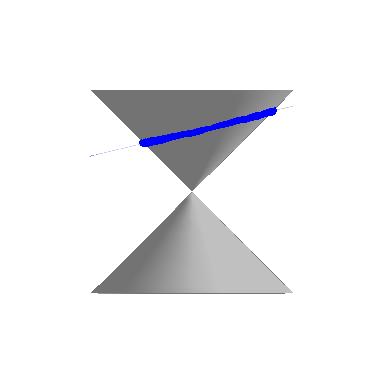
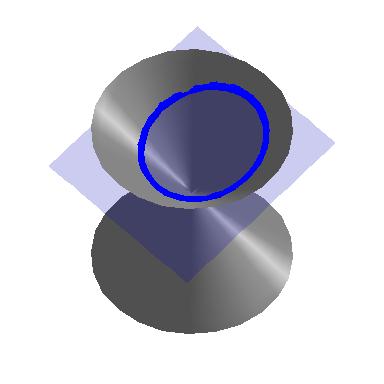
If the plane cuts parallel to the cone, we get a parabola.
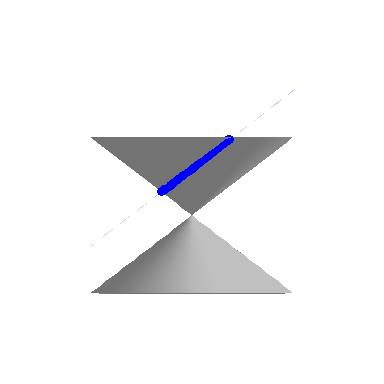
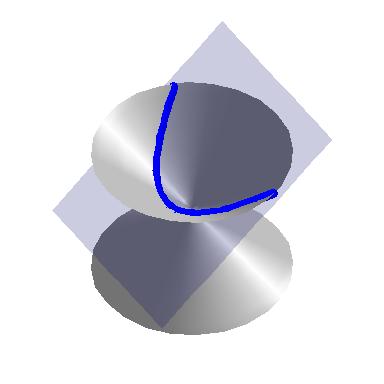
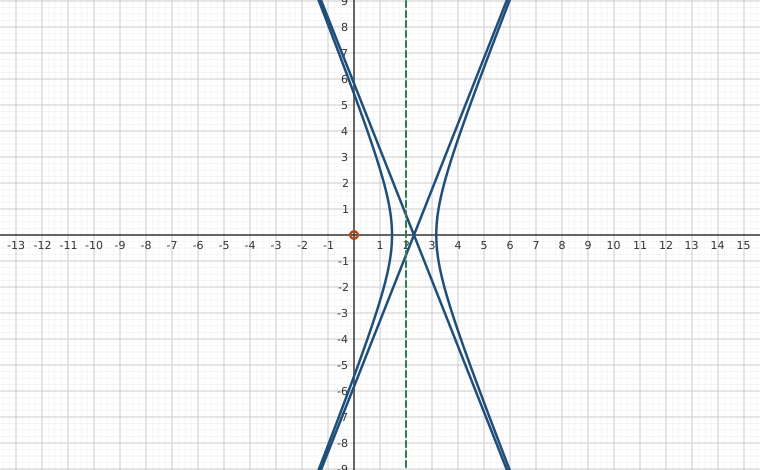
If we slice the cone with a vertical plane, we get a hyperbola.
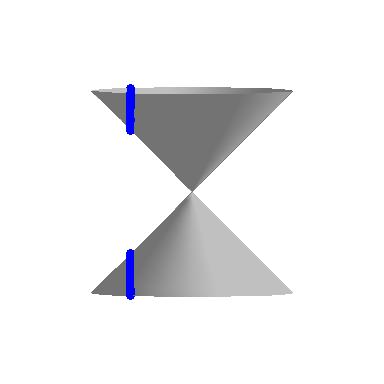
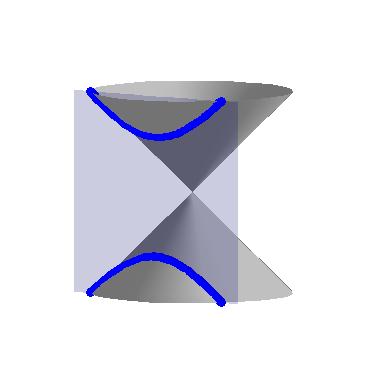
For a wonderful animation describing the conics as intersections of planes and cones, see Dr. Louis Talman's Mathematics Animated Website .
If the slicing plane contains the vertex of the cone, we get the so-called `degenerate' conics: a point, a line, or two intersecting lines.
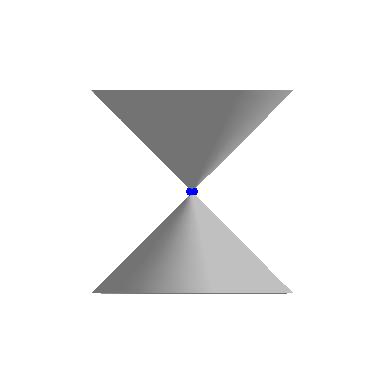
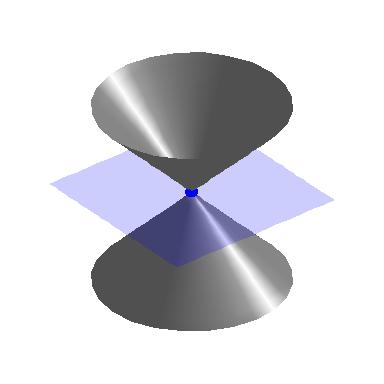
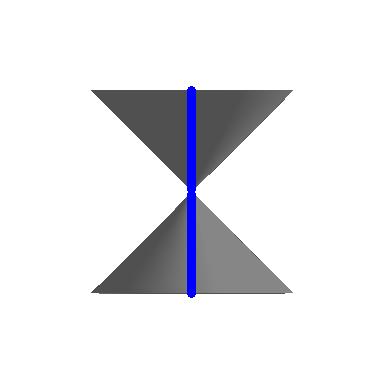
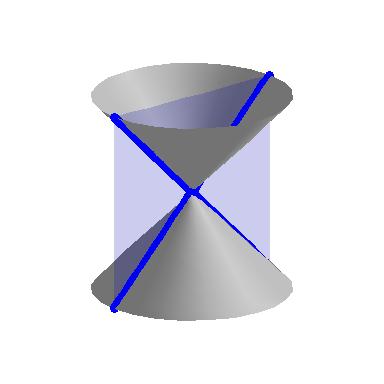
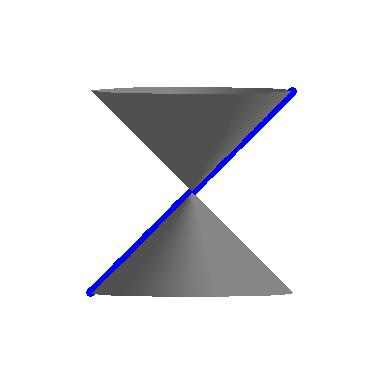
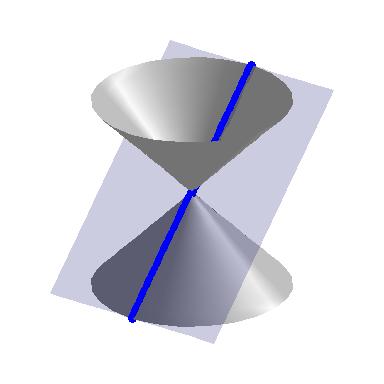
We will focus the discussion on the non-degenerate cases: circles, parabolas, ellipses, and hyperbolas, in that order. To determine equations which describe these curves, we will make use of their definitions in terms of distances.
Adapted from Precalculus, 3rd corrected edition, by Carl Stitz and Jeff Zeager (stitz-zeager.com), licensed under CC BY-NC-SA 3.0. Changes were made: reformatted as an accessible XYZ web edition. License: CC-BY-NC-SA-3.0.