

7B Slope of a Line and Average Rates of Change
7B Slope of a Line and Average Rates of Change
Read the transcriptDownload the videoNarration credits and licences
For this exercise, assume IBM stock had a price of $186.91 at the end of September 2014 and $160.44 at the end of December. Over that three month period, what was the average rate of change of the stock price per month? Questions like this are key to understanding stock prices and business models. How much something is changing on average is often called the “Slope”. In this chapter we will seek to understand the concept of slope and its applications.
What is slope? Slope is defined as vertical change divided by horizontal change. In terms of ordered pairs it is change in y divided by change in x. In math we sometimes write the change in y as “” and the change in x as “”. The symbol is the Greek letter delta. Remember slope is best understood as a fraction that describes change between variables.
Look at the following graph. Let’s see if we can find the slope of the line.
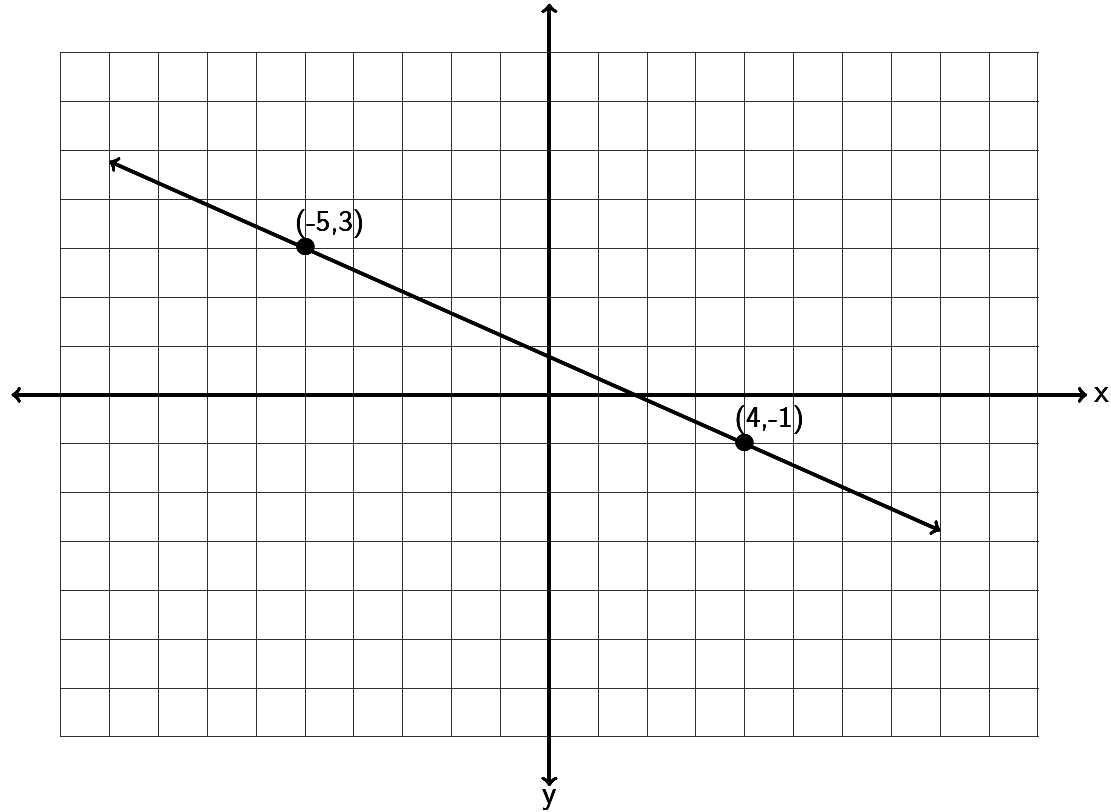
To find the slope of a line, always start by trying to find two points on the line. This line goes through the points (-5,3) and (4,-1). Any two points on the line you use will still give you the same slope. If we start at (-5,3) and go down and to the right to (4,-1), can you find how much it goes down (vertical change) and how much it goes to the right (horizontal change). Notice to get from one point to the other, we had to go down 4 (-4 vertical change) and right 9 (+9 horizontal change). Remember going up or to the right are positive directions, while going down or to the left are negative directions. The slope is the fraction of the vertical change divided by the horizontal change. Notice that a negative number divided by a positive number gives you a negative answer.
Does the order we pick the points matter? What if we start at (4,-1) and go up and to the left to (-5,3)? Will we get a different slope? Let’s see. To go from (4,-1) to (-5,3) we would need to go up 4 (+4 vertical change) and left 9 (-9 horizontal change). So we would get the following.
Notice the slope is the same. So to review, when we find slope it does not matter the points we pick as long as they are on the line and it does not matter the order we pick them. All will give us the same slope.
Let’s look at a second example. Suppose a line goes through the point (-2, -4) and has a slope of 3. Could you draw the line? The first thing to remember when dealing with slope is that it should be a fraction. Can you write 3 as a fraction? Of course. , but what does that mean? Remember slope is the vertical change divided by the horizontal change so we see the following interpretation.
When using the slope to graph a line, you always need a point to start at. In this case we will start at (-2,-4) and then go up 3 and right 1. You can go up 3 and right 1 as many times as you want and can get more points. 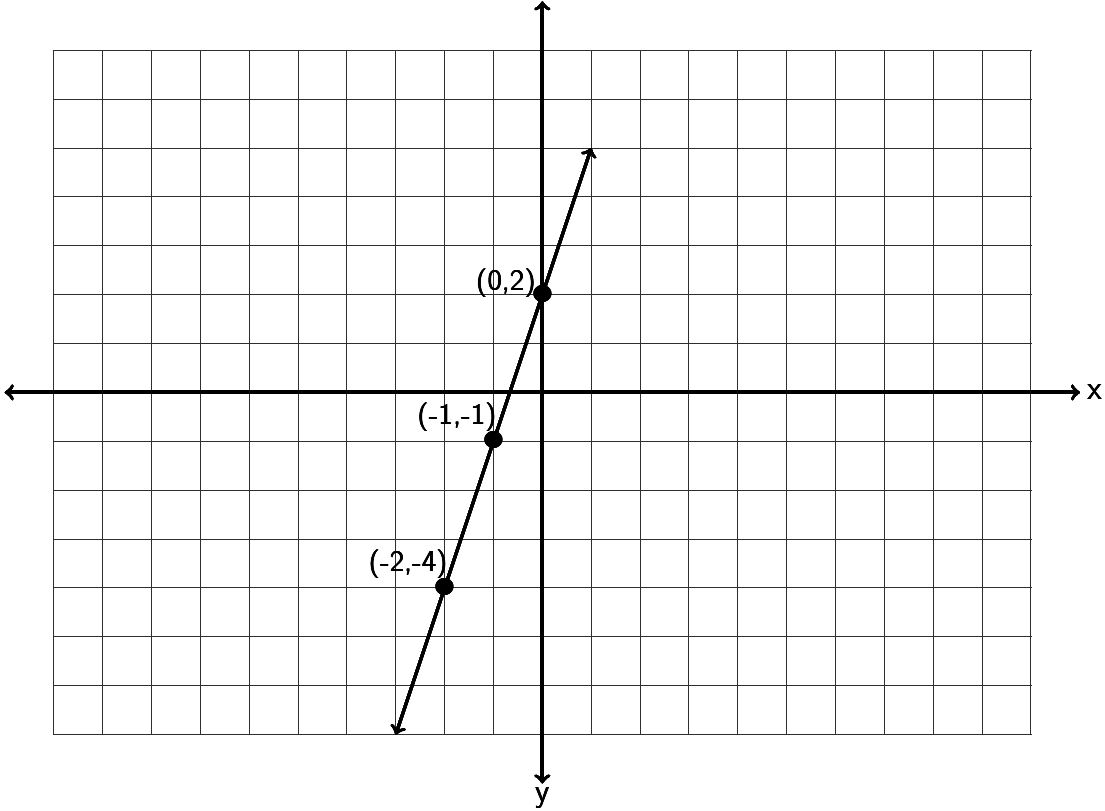
Notice a couple things from the last two examples.
A line with positive slope will be increasing from left to right. A line with negative slope will be decreasing from left to right.
For lines with a negative slope it is better to think of it as a negative numerator and a positive denominator. For example a slope of . Do not put the negative sign in both the numerator and denominator. . A negative divided by a negative is positive.
Try the following examples with your instructor.
What do we do if we want to find the slope between two points, but do not want to take the time to graph the points?
To get the vertical change you can subtract the y-coordinates of the two points. To get the horizontal change, you can subtract the x-coordinates of the two points. Be careful! You need to subtract in the same order. Here is the formula. The slope (m) of the line between is
For example, find the slope of the line between (-7, 6) and (-3, -4). Identify one of the points as and the other point as . Remember, with slope it does not matter which point you start with. Suppose we let be (-7, 6) and let be (-3, -4). Plugging in the correct values into the formula gives the following.
. Be careful to subtract in the correct order. Also be careful of negative signs. You may need to subtract a negative. Simplifying gives the following.
Try the following example with your instructor.
What about the slope of horizontal lines? Horizontal lines change a lot horizontally but have zero vertical change. Hence the slope of a horizontal line is . So horizontal lines are the only lines that have a slope equal to zero.
What about the slope of vertical lines? Vertical lines have tons of vertical change but have zero horizontal change. Hence the slope of a vertical line is . Remember we cannot divide by zero. So vertical lines are the only lines that do not have a slope. We say the slope is undefined or does not exist.
A key point to remember is that horizontal lines have a slope = 0, while vertical lines do not have any slope at all (undefined). This is actually one of the ways we identify horizontal and vertical lines.
Try the following examples with your instructor.
Parallel lines go in the same direction. Nonvertical parallel lines have the same slope; vertical lines are parallel to each other and have undefined slope. If a line has a slope of 1/3, then the line parallel to it will also have a slope of 1/3.
Perpendicular lines are lines which meet at a right angle (exactly 90 degrees). Nonvertical perpendicular lines with nonzero slopes have slopes that are negative reciprocals of each other. A horizontal line and a vertical line are also perpendicular. Remember a reciprocal is flipping the fraction. The slope of a perpendicular line will not only flip the fraction but will also have the opposite sign. For example if a line has a slope of 2/7 then the perpendicular line will have a slope of -7/2. If a line has a slope of -1/6 then the line perpendicular will have a slope of +6/1 = +6.
Try the following examples with your instructor.
Applications
At the beginning of this section we looked at IBM stock prices for a 3 month period in 2014. The slope is also the average rate of change. For this exercise, assume IBM stock had a price of $186.91 at the end of September 2014 and $160.44 at the end of December. Over that three month period, what was the average rate of change of the stock price per month?
To answer this question we simply need to find the slope. A couple key things to look at. First of all notice they want to know the change in stock price per month. That is important since it tells us the slope should be price/month. If you remember your slope formula, this implies that the price must be the y-value and month the x-value. Writing the information as two ordered pairs gives us the following.
( month 9, $186.91 )
( month 12, $160.44)
Letting the first point ( month 9, $186.91 ) be and the second point ( month 12, $160.44) be , we can plug into our slope formula and get the following.
But what does this mean? The key is units. Remember in this problem the y-values were in dollars and the x-values were in months. So the numerator of our answer is in dollars and the denominator is in months.
Does this mean 1 month of IBM stock was $8.82? No it does not. Remember slope is a rate of change. It is telling us how much the IBM stock is changing over time. The negative slope describes the average decrease over the full interval; it does not imply a decrease in every month. Under the stated prices, the stock price decreased by about $8.82 per month on average over this interval.
Try the following example with your instructor.
Practice Problems Section 7B
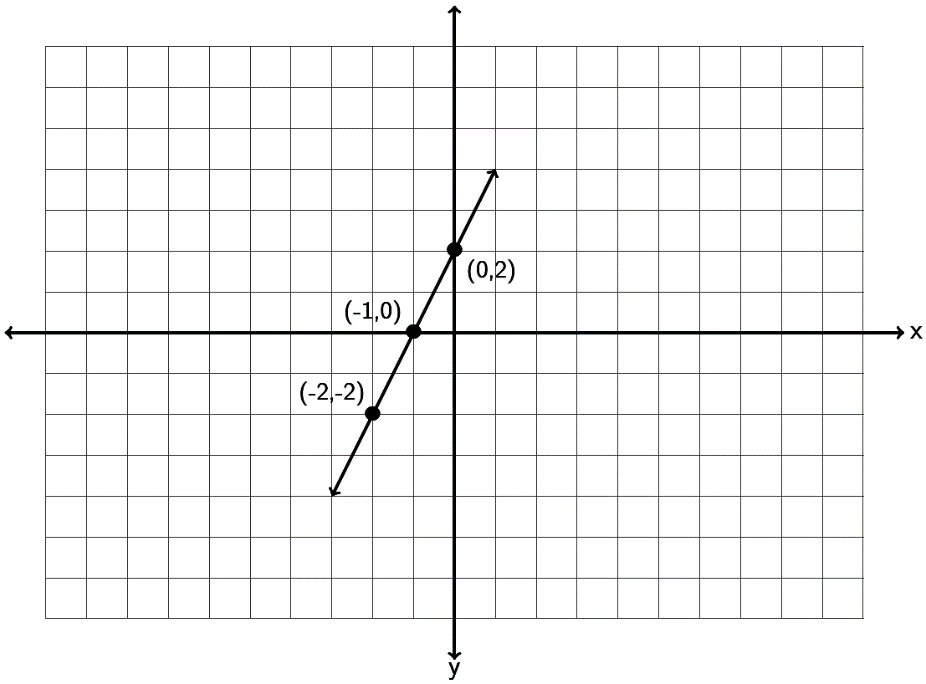
Find the slope of the following line by finding the vertical and horizontal change. Be sure to write your answer in lowest terms.
Check answer
2
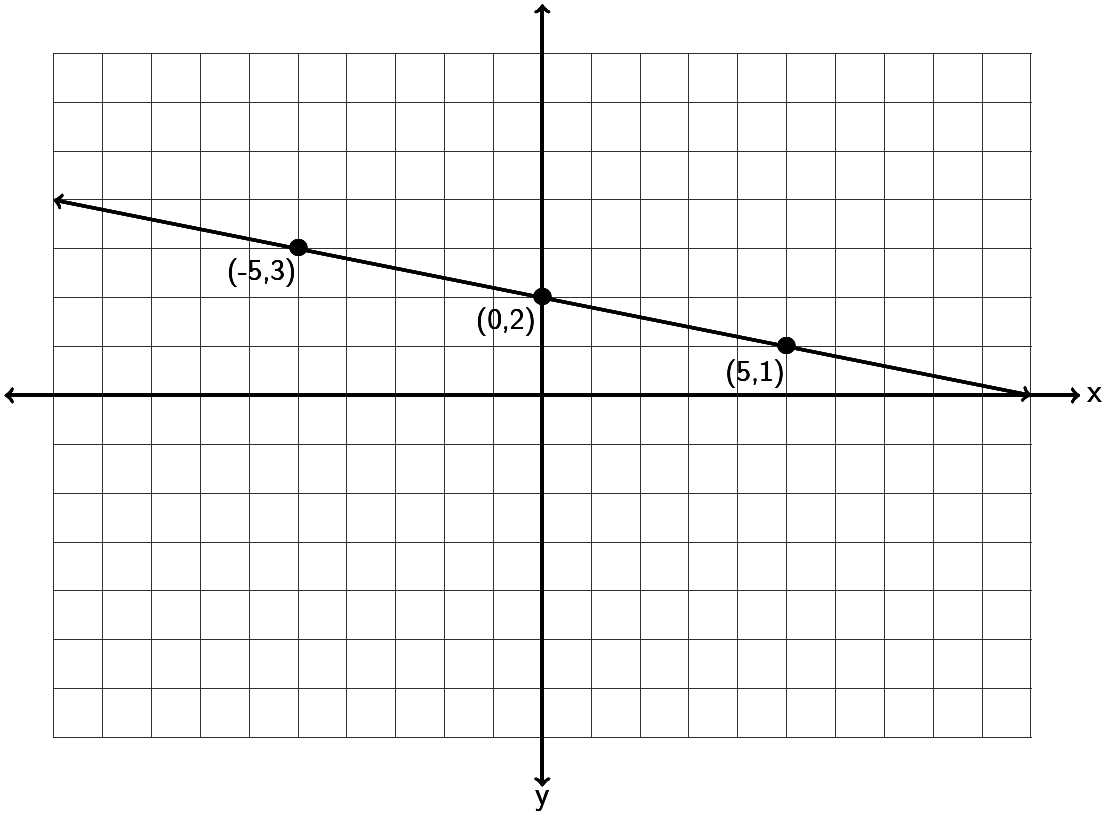
Find the slope of the following line by finding the vertical and horizontal change. Be sure to write your answer in lowest terms.
Find the slope of the following line by finding the vertical and horizontal change. Be sure to write your answer in lowest terms.
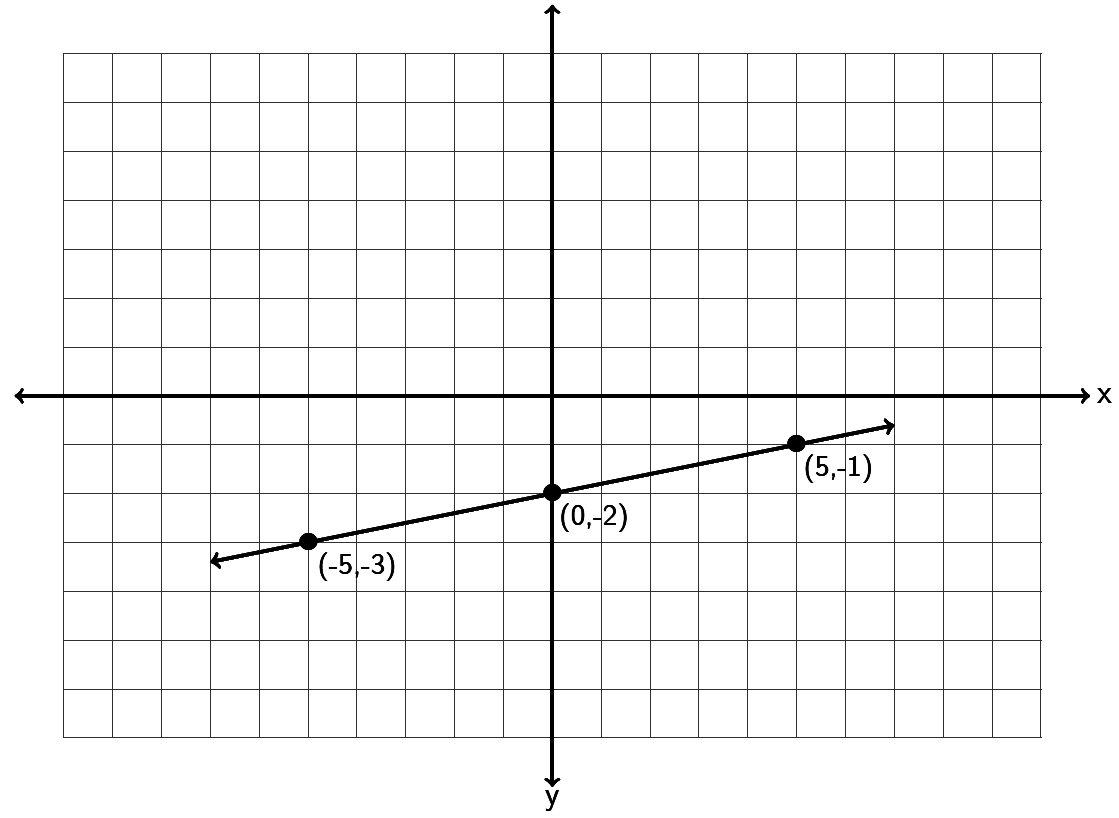
Check answer
Find the slope of the following line by finding the vertical and horizontal change. Be sure to write your answer in lowest terms.
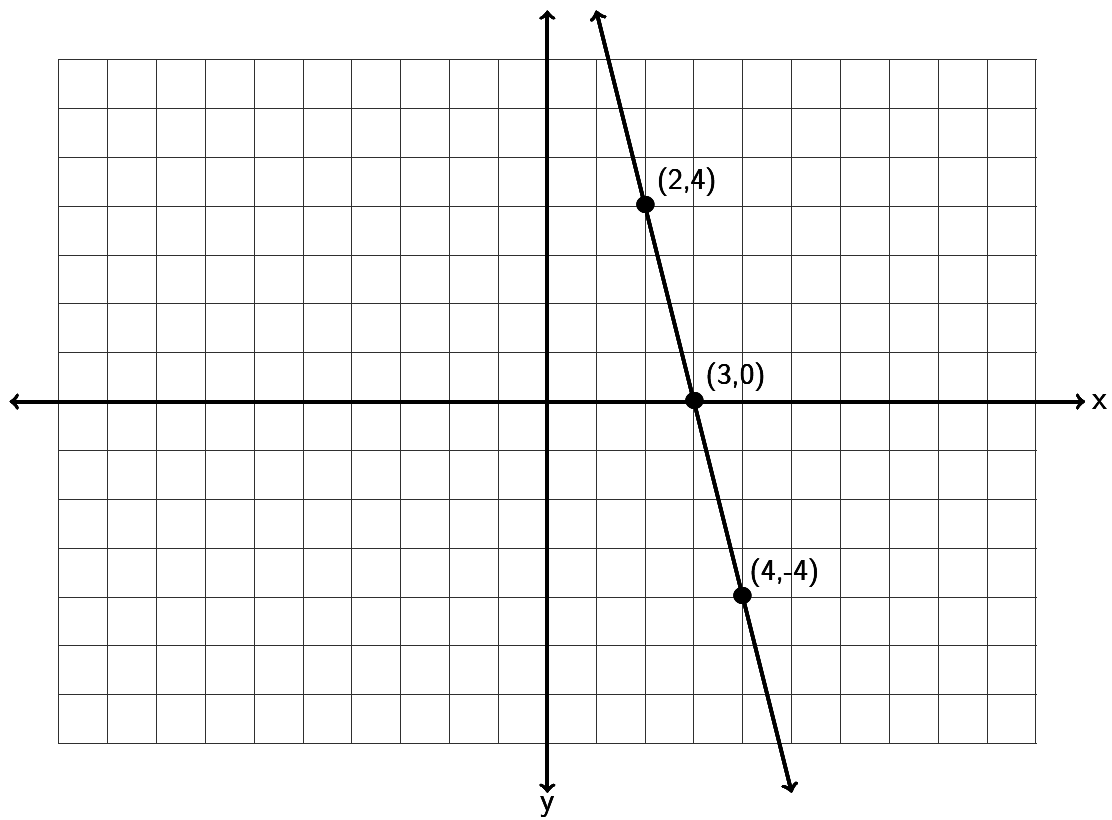
Find the slope of the following line by finding the vertical and horizontal change. Be sure to write your answer in lowest terms.
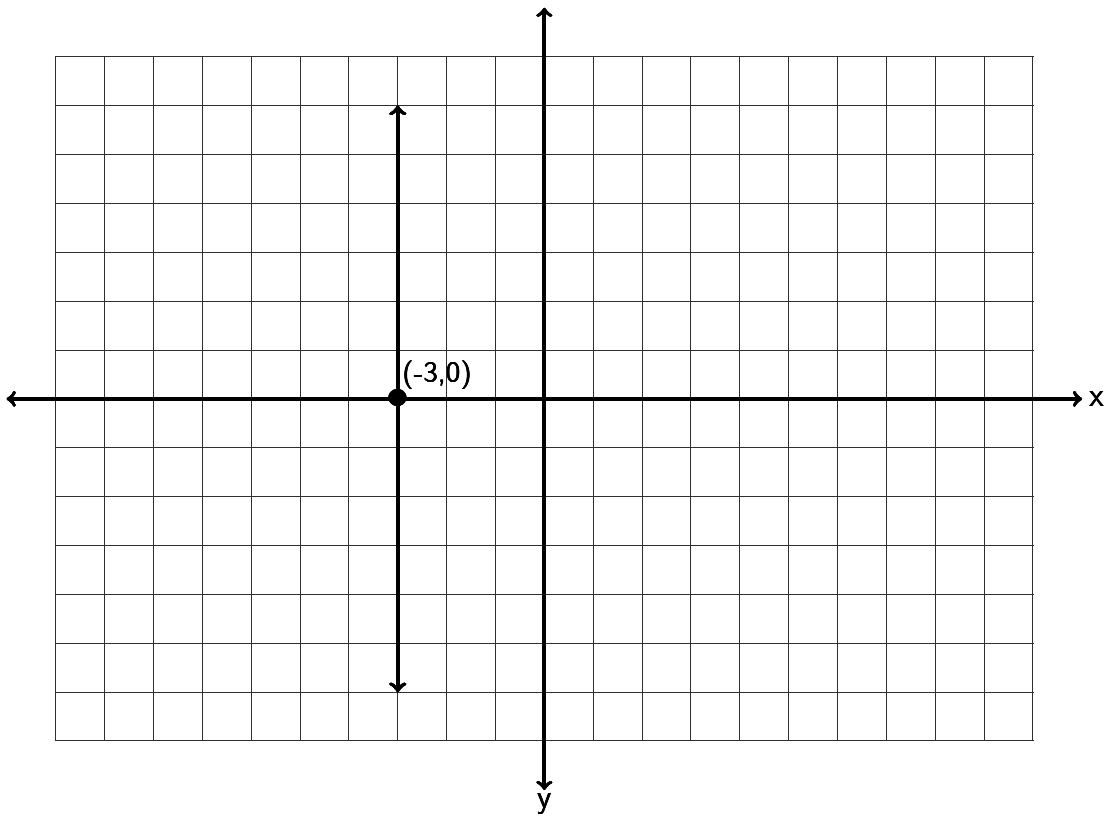
Check answer
undefined
Find the slope of the following line by finding the vertical and horizontal change. Be sure to write your answer in lowest terms.
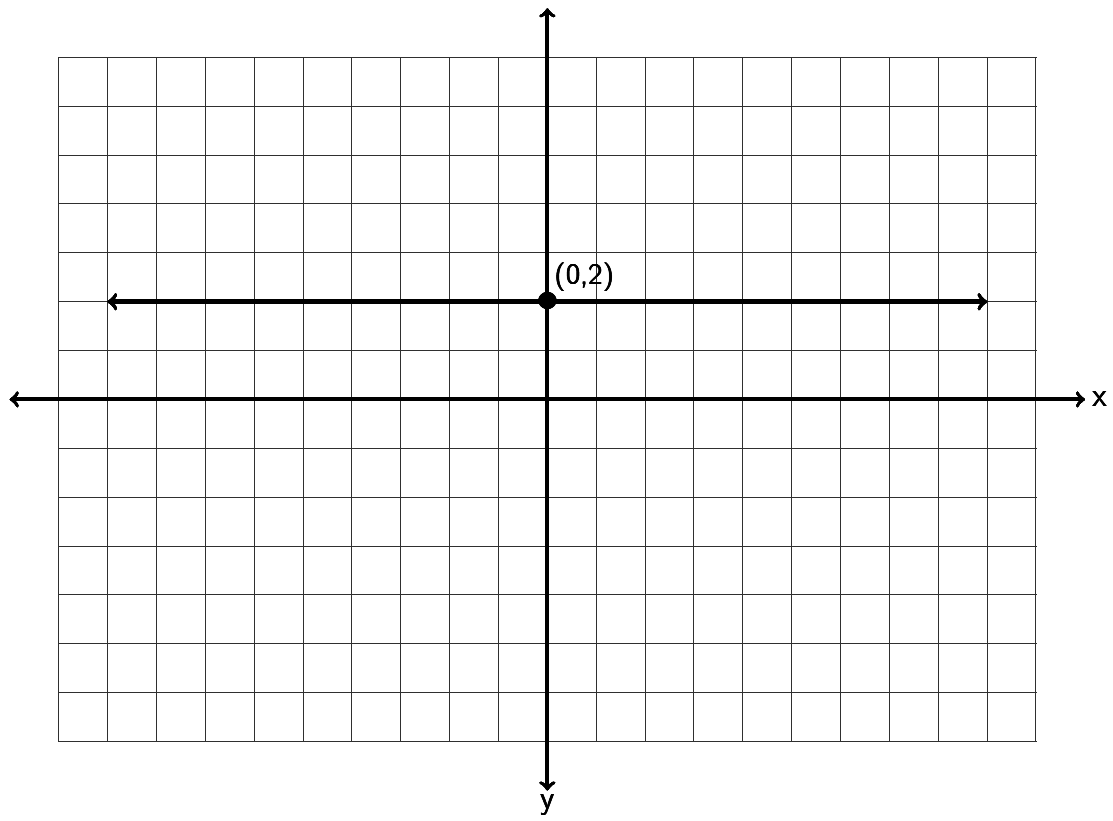
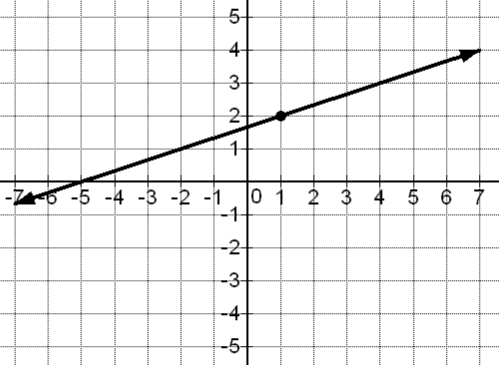
Draw a line that goes through the point (1, 2) and has a slope of .
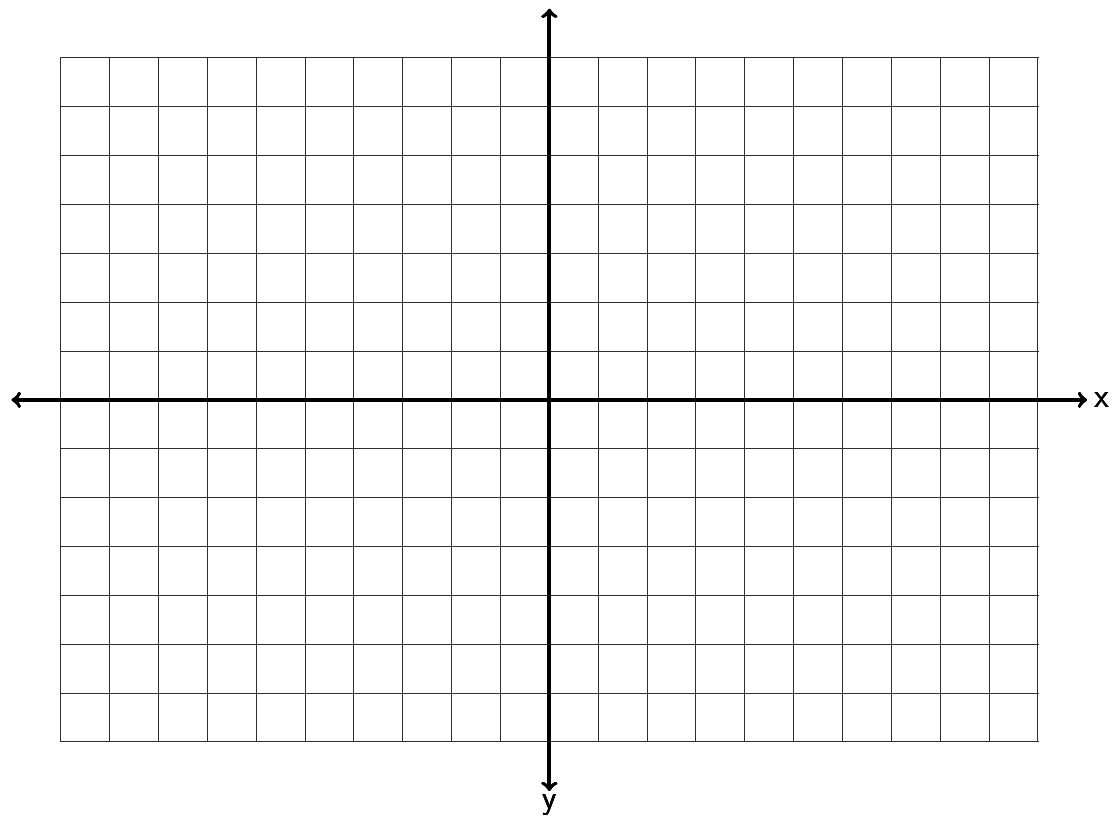
Check answer
Draw a line that goes through the point (-5, 1) and has a slope of .
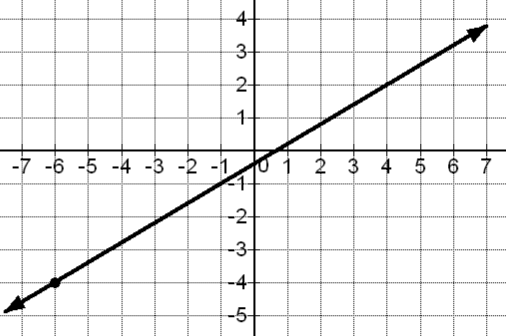
Draw a line that goes through the point (-6, -4) and has a slope of .
Check answer
Draw a line that goes through the point (-4,0) and has a slope of .
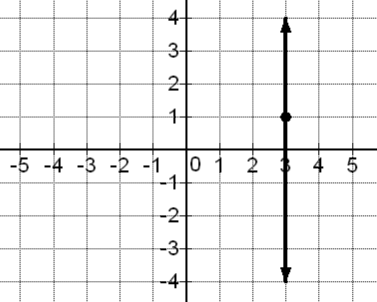
Draw a line that goes through the point (3, 1) and has an undefined slope.
Check answer
Draw a line that goes through the point (0, -3) and has a slope = 0.
Draw a line that goes through the point (-5, -2) and has a slope of .
Check answer
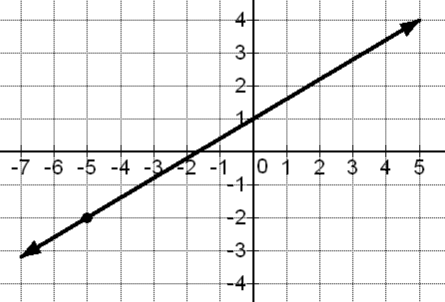
Draw a line that goes through the point (-4, 6) and has a slope of .
Draw a line that goes through the point (1, -6) and has a slope of .
Check answer
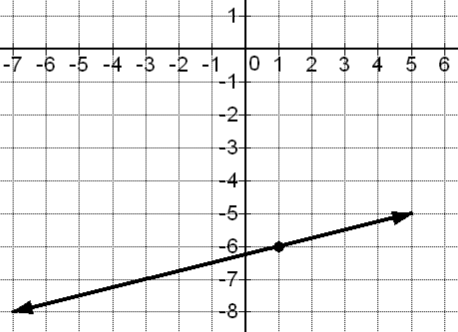
Draw a line that goes through the point (2,0) and has a slope of .
Draw a line that goes through the point (-4, -2) and has an undefined slope.
Check answer
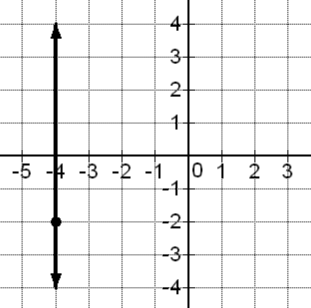
Draw a line that goes through the point (0, 5) and has a slope = 0.
Use the slope formula to find the slope of the line between . Be sure to simplify your answer and write it in lowest terms.
Check answer
Use the slope formula to find the slope of the line between . Be sure to simplify your answer and write it in lowest terms.
Use the slope formula to find the slope of the line between Be sure to simplify your answer and write it in lowest terms.
Check answer
– 4
Use the slope formula to find the slope of the line between . Be sure to simplify your answer and write it in lowest terms.
Use the slope formula to find the slope of the line between . Be sure to simplify your answer and write it in lowest terms.
Check answer
0
Use the slope formula to find the slope of the line between . Be sure to simplify your answer and write it in lowest terms.
Use the slope formula to find the slope of the line between . Be sure to simplify your answer and write it in lowest terms.
Check answer
A line has a slope of +5/8. What is the slope of a line parallel to it? What is the slope of a line perpendicular to it?
A line has a slope of -13. What is the slope of a line parallel to it? What is the slope of a line perpendicular to it?
Check answer
parallel: -13, perpendicular:
A line has a slope of -2/9. What is the slope of a line parallel to it? What is the slope of a line perpendicular to it?
A line has a slope of +6. What is the slope of a line parallel to it? What is the slope of a line perpendicular to it?
Check answer
parallel: 6, perpendicular:
A line has a slope of +2/7. What is the slope of a line parallel to it? What is the slope of a line perpendicular to it?
A line has a slope of -9. What is the slope of a line parallel to it? What is the slope of a line perpendicular to it?
Check answer
parallel: -9, perpendicular:
When a toy store has its employees work 40 hours a week, the profits for that week are $4600. If the store has its employees work 45 hours then the profits for that week are $4180 due to having to pay the employee’s overtime. Write two ordered pairs with x being hours worked and y being profit. What is the average rate of change in profit per hour worked?
The longer an employee works at a software company, the higher his or her salary is. Let’s explore the relationship between years worked (x) and salary in thousands of dollars (y). A person that has worked two years for the company makes an annual salary of 62 thousand dollars. A person that has worked ten years for the company makes an annual salary of 67 thousand dollars. Write two ordered pairs and find the average rate of change in salary in thousands per year worked.
Check answer
(2, 62), (10, 67), slope = or
The older a puppy gets, the more the puppy weighs. Let’s explore the relationship between the number of months old a puppy is and its weight in pounds. At 4 months old, a puppy weighed 6 pounds. At 12 months old the puppy weighed 38 pounds. Write two ordered pairs with x being the age of the puppy in months and y being the weight in pounds. Now find the average rate of change in pounds per month.
In week 9, a stock sells for $85. By week 23 the stock sells for $15. Write two ordered pairs with x being the week and y being the stock price. Find the average rate of change in dollars per week.
Check answer
(9, 85), (23, 15), slope = -5 or
Questions 36 – 39: Match the equation in slope intercept form to the graphed line
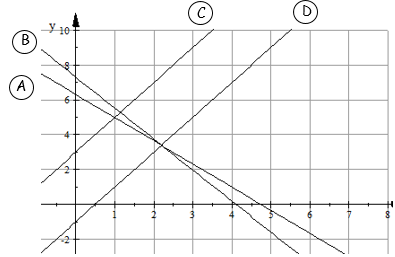
Line
Equation
Check answer
A
Check answer
C
Adapted from Preparing for Algebra and Statistics, Third Edition, by Matt Teachout. License: CC BY 4.0. Copyright and sources.