
15.6 Normal (Gaussian)
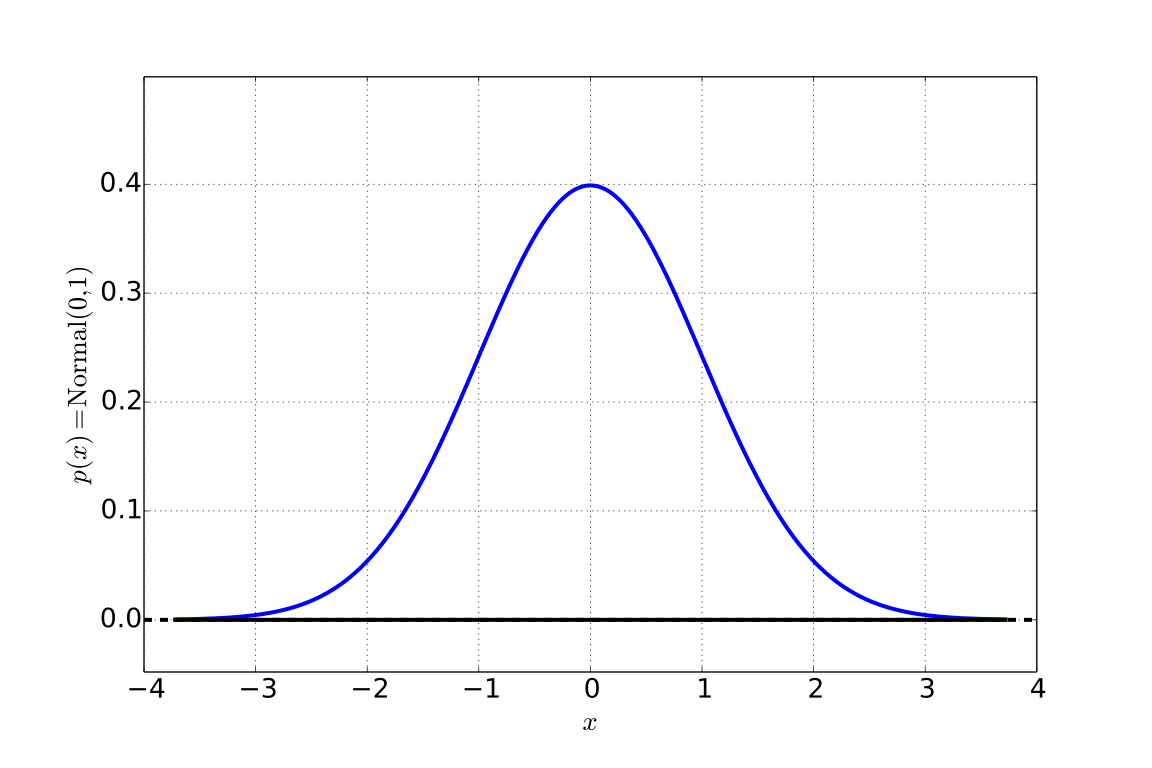
Normal distribution The Normal distribution is the most common distribution found in all of statistical inference. It is the best prior distribution to use, when all you know is that your data has a constant true value and some constant variation around that true value. It is the posterior probability distribution for the unknown true value given samples and the known deviation, . It is also the approximate form for nearly every distribution when you have many samples. The mathematical form for the normal, or Gaussian, is
Three useful properties of for the normal distribution are the following:
- the normal distribution value at the maximum (i.e. at ) is around 2.7 times larger than the value one- away from the maximum (at and )
- the total probability between these two points is 65%.
- 95% of the distribution lies between and (see Figure 7.3)
Adapted from Statistical Inference for Everyone, by Brian Blais (Bryant University), licensed under CC BY-SA 4.0 (dual-licensed under the GNU FDL 1.2 or later; this adaptation uses the CC BY-SA grant). Changes were made; this adaptation is distributed under the same license. License: CC-BY-SA-4.0.