

Chapter 4: Sets
Sets and Venn diagrams
A source-bound narrated opening with a worked example, an eight-second thinking pause, a checked result, English captions, and a transcript.
Read the transcriptDownload the videoNarration credits and licences
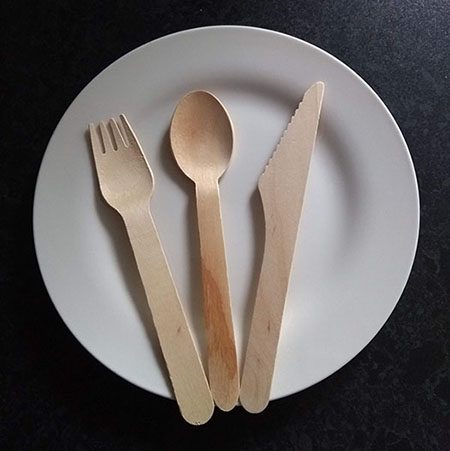
Think back to your kitchen organization. If the drawer is the set, then the forks and knives are elements in the set. Sets can be described in a number of different ways: by roster, by set-builder notation, by interval notation, by graphing on a number line, and by Venn diagrams. Sets are typically designated with capital letters. The simplest way to represent a set with only a few members is the roster (or listing) method, in which the elements in a set are listed, enclosed by curly braces and separated by commas. For example, if represents the set of utensils in our kitchen drawer, we can represent by using the following set notation with the roster method:
Corequisite Skills for Introductory Statistics is a custom course edition compiled for Introductory Statistics corequisite courses from OpenStax Contemporary Mathematics, Elementary Algebra 2e, Intermediate Algebra 2e, Prealgebra 2e. Content by OpenStax is reproduced as published, apart from any corrections recorded for this edition. Sections are renumbered to follow the course outline. The course outline is adapted from Larry Green's Support Course for Elementary Statistics (LibreTexts, https://stats.libretexts.org/Bookshelves/Introductory_Statistics/Support_Course_for_Elementary_Statistics), used under CC BY 4.0 (https://creativecommons.org/licenses/by/4.0/). Lessons 2.4 and 6.7 are written for this edition by XYZ Homework. Every OpenStax lesson is abridged to the subsections and practice exercises this course uses. Lessons are headed with their course titles, not the source section titles. Access the complete originals free at openstax.org. License: CC-BY-NC-SA-4.0.