
11.2 Parabolas
Graph Vertical Parabolas
The next conic section we will look at is a parabola. We define a parabola as all points in a plane that are the same distance from a fixed point and a fixed line. The fixed point is called the focus, and the fixed line is called the directrix of the parabola.
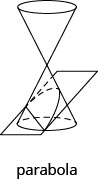
Previously, we learned to graph vertical parabolas from the general form or the standard form using properties. Those methods will also work here. We will summarize the properties here.
| Vertical Parabolas | ||
|---|---|---|
| General form | Standard form | |
| Orientation | up; down | up; down |
| Axis of symmetry | ||
| Vertex | Substitute and solve for y. | |
| y-intercept | Let | Let |
| x-intercepts | Let | Let |
The graphs show what the parabolas look like when they open up or down. Their position in relation to the x- or y-axis is merely an example.
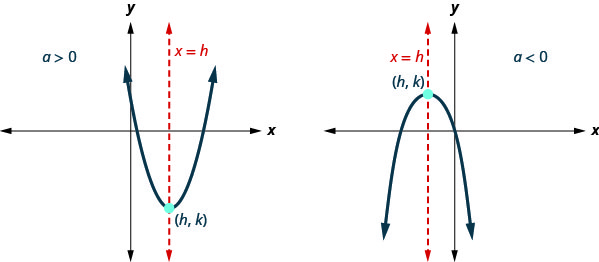
To graph a parabola from these forms, we used the following steps.
The next example reviews the method of graphing a parabola from the general form of its equation.
The next example reviews the method of graphing a parabola from the standard form of its equation,
Graph Horizontal Parabolas
Our work so far has only dealt with parabolas that open up or down. We are now going to look at horizontal parabolas. These parabolas open either to the left or to the right. If we interchange the x and y in our previous equations for parabolas, we get the equations for the parabolas that open to the left or to the right.
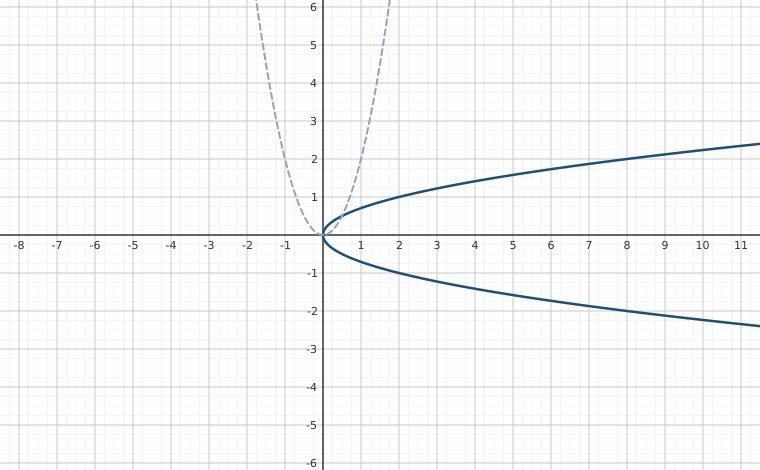
| Horizontal Parabolas | ||
|---|---|---|
| General form | Standard form | |
| Orientation | right; left | right; left |
| Axis of symmetry | ||
| Vertex | Substitute and solve for x. | |
| y-intercepts | Let | Let |
| x-intercept | Let | Let |
The graphs show what the parabolas look like when they to the left or to the right. Their position in relation to the x- or y-axis is merely an example.
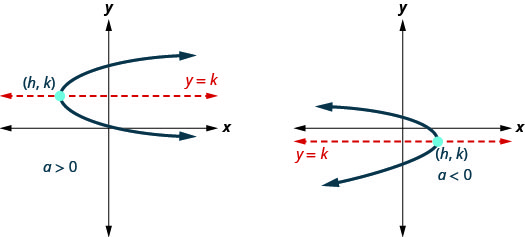
Looking at these parabolas, do their graphs represent a function? Since both graphs would fail the vertical line test, they do not represent a function.
To graph a parabola that opens to the left or to the right is basically the same as what we did for parabolas that open up or down, with the reversal of the x and y variables.
In the next example, the vertex is not the origin.
In Table 11.1, we see the relationship between the equation in standard form and the properties of the parabola. The How To box lists the steps for graphing a parabola in the standard form We will use this procedure in the next example.
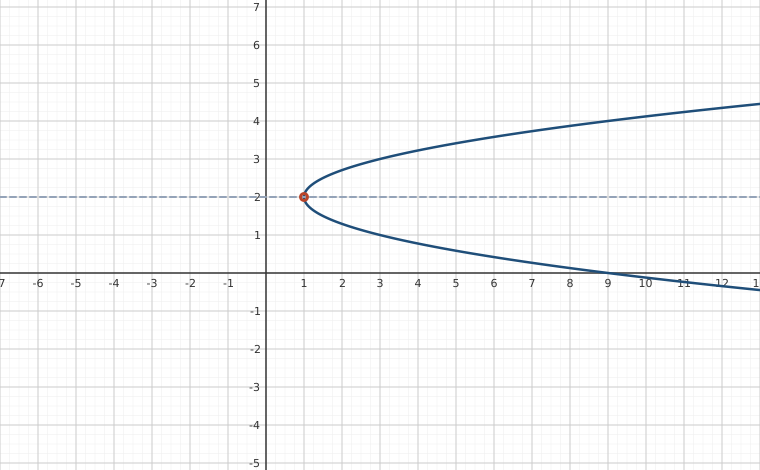
In the next example, we notice the a is negative and so the parabola opens to the left.
The next example requires that we first put the equation in standard form and then use the properties.
Solve Applications with Parabolas
Many architectural designs incorporate parabolas. It is not uncommon for bridges to be constructed using parabolas as we will see in the next example.
Key Concepts
- Parabola: A parabola is all points in a plane that are the same distance from a fixed point and a fixed line. The fixed point is called the focus, and the fixed line is called the directrix of the parabola.
Vertical Parabolas General form Standard form Orientation up; down up; down Axis of symmetry Vertex Substitute and
solve for y.y- intercept Let Let x-intercepts Let Let
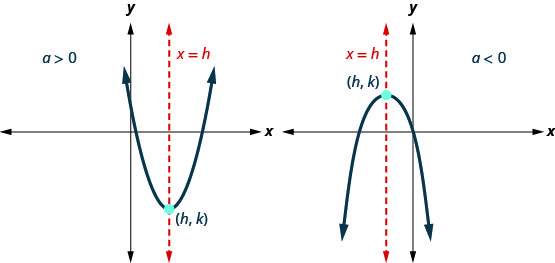
- How to graph vertical parabolas or using properties.
- Determine whether the parabola opens upward or downward.
- Find the axis of symmetry.
- Find the vertex.
- Find the y-intercept. Find the point symmetric to the y-intercept across the axis of symmetry.
- Find the x-intercepts.
- Graph the parabola.
Horizontal Parabolas General form Standard form Orientation right; left right; left Axis of symmetry Vertex Substitute and
solve for x.y-intercepts Let Let x-intercept Let Let
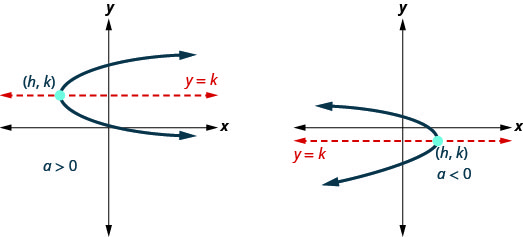
- How to graph horizontal parabolas or using properties.
- Determine whether the parabola opens to the left or to the right.
- Find the axis of symmetry.
- Find the vertex.
- Find the x-intercept. Find the point symmetric to the x-intercept across the axis of symmetry.
- Find the y-intercepts.
- Graph the parabola.
Practice Makes Perfect
Graph Vertical Parabolas
In the following exercises, graph each equation by using properties.
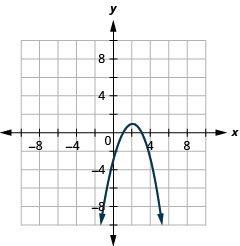
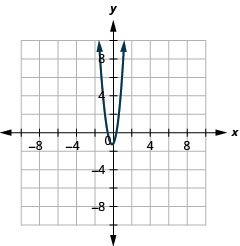
In the following exercises, ⓐ write the equation in standard form and ⓑ use properties of the standard form to graph the equation.
ⓐ
ⓑ
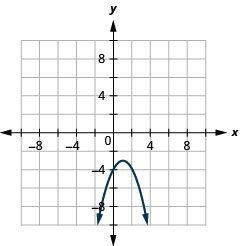
ⓐ
ⓑ
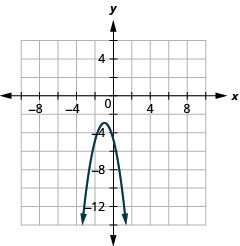
Graph Horizontal Parabolas
In the following exercises, graph each equation by using properties.
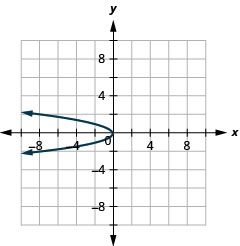
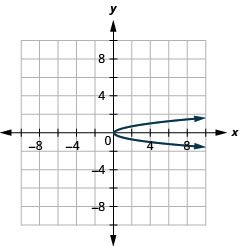
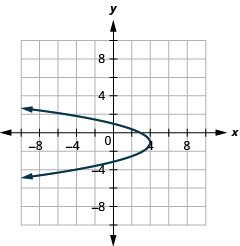
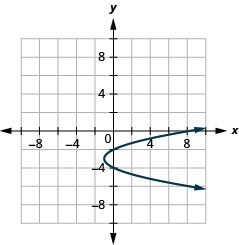
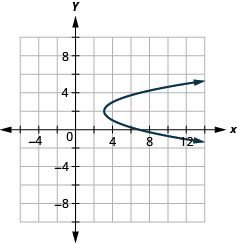
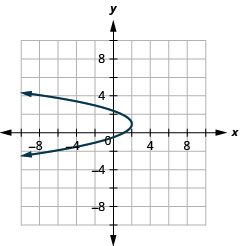
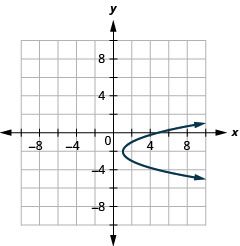
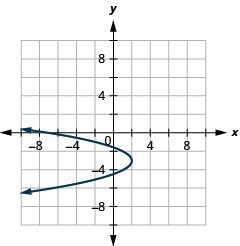
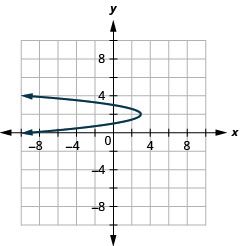
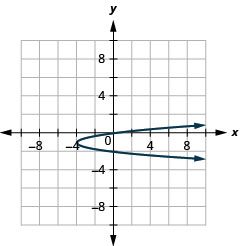
In the following exercises, ⓐ write the equation in standard form and ⓑ use properties of the standard form to graph the equation.
ⓐ
ⓑ
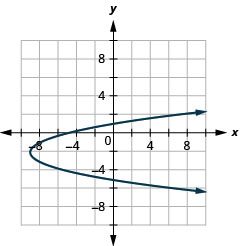
ⓐ
ⓑ
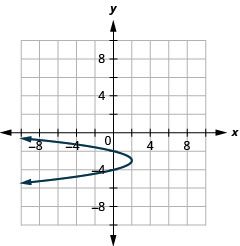
Mixed Practice
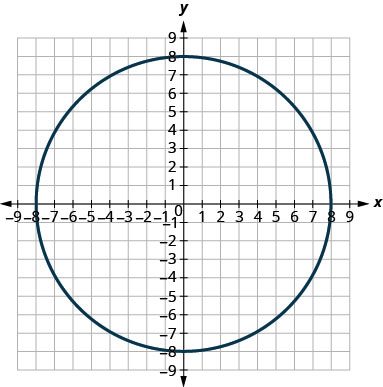
In the following exercises, match each graph to one of the following equations: ⓐ x2 + y2 = 64 ⓑ x2 + y2 = 49
ⓒ (x + 5)2 + (y + 2)2 = 4 ⓓ (x − 2)2 + (y − 3)2 = 9 ⓔ y = −x2 + 8x − 15 ⓕ y = 6x2 + 2x − 1
ⓐ
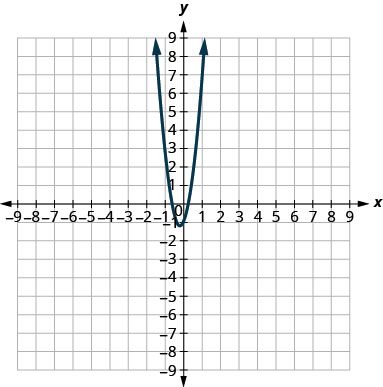
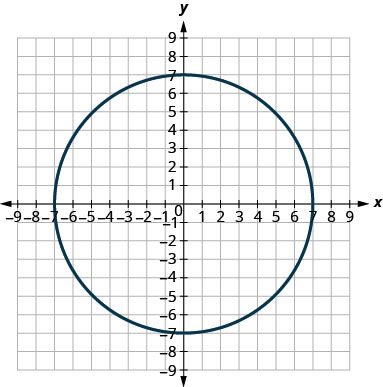
ⓑ
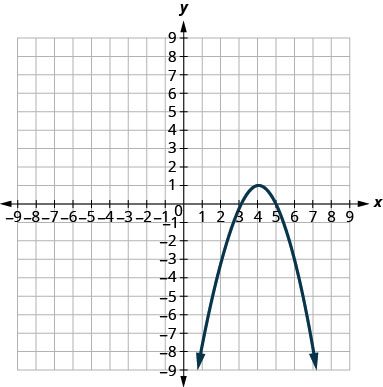
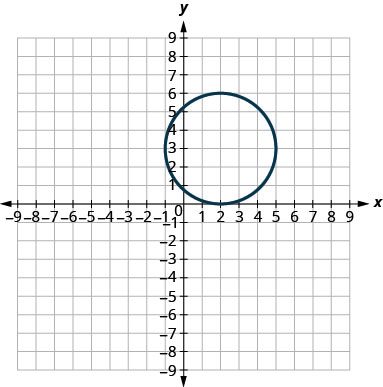
ⓓ
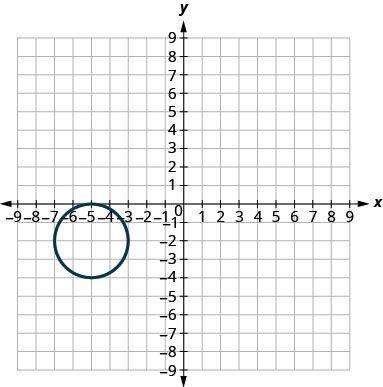
Solve Applications with Parabolas
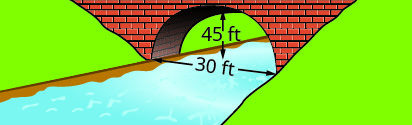
Write the equation in standard form of the parabolic arch formed in the foundation of the bridge shown. Write the equation in standard form.
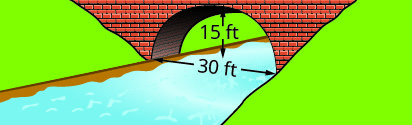
Write the equation in standard form of the parabolic arch formed in the foundation of the bridge shown. Write the equation in standard form.
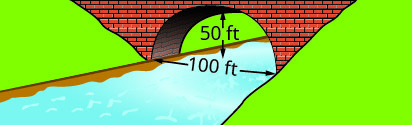
Write the equation in standard form of the parabolic arch formed in the foundation of the bridge shown. Write the equation in standard form.
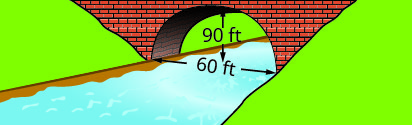
Write the equation in standard form of the parabolic arch formed in the foundation of the bridge shown. Write the equation in standard form.
Writing Exercises
In your own words, define a parabola.
Answers will vary.
Is the parabola a function? Is the parabola a function? Explain why or why not.
Write the equation of a parabola that opens up or down in standard form and the equation of a parabola that opens left or right in standard form. Provide a sketch of the parabola for each one, label the vertex and axis of symmetry.
Answers will vary.
Explain in your own words, how you can tell from its equation whether a parabola opens up, down, left or right.
Self Check
ⓐ After completing the exercises, use this checklist to evaluate your mastery of the objectives of this section.
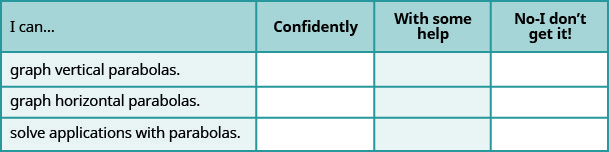
ⓑ After reviewing this checklist, what will you do to become confident for all objectives?
Adapted from Intermediate Algebra 2e by OpenStax (openstax.org), licensed under CC BY-NC-SA 4.0. Changes were made. License: CC-BY-NC-SA-4.0.