
2.5 Handling Large Datasets
Learning Outcomes
By the end of this section, you should be able to:
- Recognize the challenges associated with large data, including storage, processing, and analysis limitations.
- Implement techniques for efficient storage and retrieval of large datasets, including compression, indexing, and chunking.
- Discuss database management systems and cloud computing and their key characteristics with regard to large datasets.
Large datasets, also known as big data, are extremely large and complex sets of data that traditional data processing methods and tools are unable to handle. These datasets typically include sizeable volumes, variety, and velocity of data, making it challenging to process, manage, and analyze them using traditional methods. Large datasets can be generated by a variety of sources, including social media, sensors, and financial transactions. They generally possess a high degree of complexity and may have structured, unstructured, or semi-structured data. Large datasets are covered in more depth in Other Machine Learning Techniques.
We have also already discussed a number of the techniques and strategies used to gain meaningful insights from big data. Survey Design and Implementation discussed sampling techniques that allow those working with data to analyze and examine large datasets by select a representative subset, or representative random sample. Preprocessing techniques covered in Data Cleaning and Preprocessing are also used to clean, normalize, and transform data to make sure it is consistent before it can be analyzed. This includes handling missing values, removing outliers, and standardizing data formats.
In this section we will consider several other aspects of data management that are especially useful with big data, including data compression, data storage, data indexing, and chunking. In addition, we’ll discuss database management systems—software that allows for the organization, manipulation, and retrieval of data that is stored in a structured format—and cloud computing.
Data Compression
Data compression is a method of reducing file size while retaining essential information; it can be applied to many types of databases. Data compression is classified into two categories, lossy and lossless:
- Lossy compression reduces the size of data by permanently extracting particular data that is considered irrelevant or redundant. This method can significantly decrease file sizes, but it also results in a loss of some data. Lossy compression is often utilized for multimedia files and images, where slight modifications in quality may not be noticeable to the human eye. Examples of lossy compression include MP3 and JPEG.
- Lossless compression aims to reduce file size without removing any data. This method achieves compression by finding patterns and redundancies in the data and representing them more efficiently. This allows for the reconstruction of the original data without any loss in quality. Lossless compression is commonly used for text and numerical data, where every piece of information is crucial. Examples of lossless compression include ZIP, RAR, and PNG.
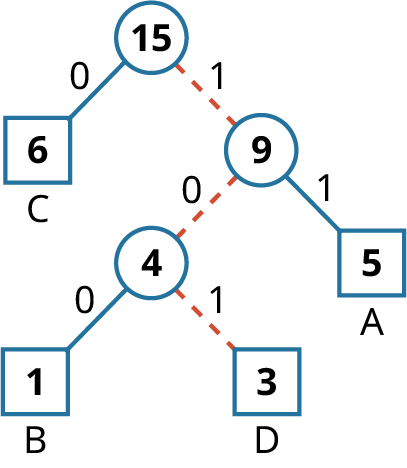
There are several methods of data lossless compression, including Huffman coding. Huffman coding works by assigning shorter binary codes to the most frequently used characters or symbols in a given dataset and longer codes to less frequently used characters, as shown in Figure 2.5. This results in a more efficient use of binary digits and reduces the overall size of the data without losing any information during compression. Huffman coding is applied to data that require fast and efficient compression, such as video compression, image compression, and data transmission and storage.
Data Storage
Big data requires storage solutions that can handle large volumes of diverse data types, offer high performance for data access and processing, guarantee scalability for growing datasets, and are thoroughly reliable. The choice of storage solution will depend on data volume, variety, velocity, performance requirements, scalability needs, budget constraints, and existing infrastructure. Organizations often deploy a combination of storage technologies to address different uses and requirements within their big data environments. Some common types of storage solutions used for big data include:
- Relational databases: Relational databases. organize data in tables and uses structured query language (SQL) for data retrieval and management. They are commonly used for traditional, structured data such as financial data.
- NoSQL databases. These databases are designed to handle unstructured data, such as social media content or data from sensors, and use non-relational data models.
- Data warehouses. A data warehouse is a centralized repository of data that combines data from multiple sources and allows for complex queries and analysis. It is commonly used for business intelligence and reporting intentions.
- Cloud storage. Cloud storage involves storing data in remote servers accessed over the internet. It offers scalability, cost-effectiveness, and remote accessibility.
- Object storage. With object storage, data are stored as objects that consist of both data and metadata. This method is often used for storing large volumes of unstructured data, such as images and videos.
Data Indexing
Data indexing is an important aspect of data management and makes it easier to retrieve specific data quickly and efficiently. It is a crucial strategy for optimizing the performance of databases and other data storage systems. Data indexing refers to the process of managing and saving the collected and generated data in a database or other data storage system in a way that allows for efficient and fast return of specific data.
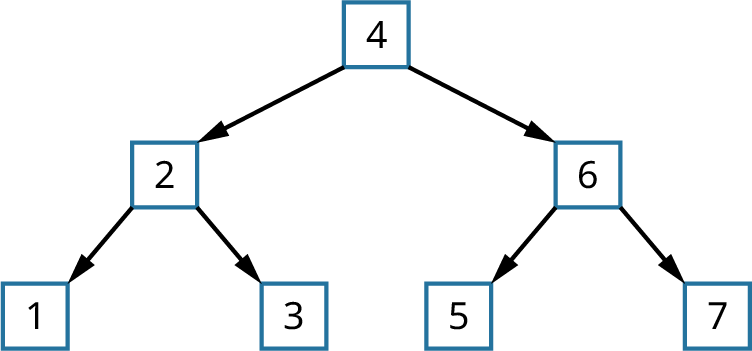
Indexing techniques vary in how they organize and store data, but they all aim to improve data retrieval performance. B-tree indexing is illustrated in Figure 2.6. It involves organizing data in a tree-like structure with a root node and branches that contain pointers to other nodes. Each node contains a range of data values and pointers to child nodes, allowing for efficient searching within a specific range of values.
Hashes indexing involves using a hash function to map data to a specific index in a table. This allows for direct access to the data based on its hashed value, making retrieval faster than traditional sequential searching. Bitmap indexing is a technique that involves creating a bitmap for each different value in a dataset. The bitmaps are then combined to quickly identify records that match a specific set of values, allowing efficient data retrieval.
Data Chunking
Data chunking, also known as data segmentation or data partitioning, is a technique used to break down large datasets into smaller, more manageable chunks and make them easier to manage, process, analyze, and store. Chunking is particularly useful when datasets are too large to be processed or analyzed as a single unit. By dividing the data into smaller chunks, various processing tasks can be distributed across multiple computing nodes or processing units.
Data chunking is used in data storage systems and data transmission over networks, and it is especially useful when working with large datasets that exceed the capacity of a single machine or when transferring data over a network with limited bandwidth. The divided data in data chunking is known as a chunk or block. The size of each chunk can vary depending on the requirements and range from a few kilobytes to several gigabytes. These chunks are typically organized sequentially, with each chunk containing a set of data from the larger dataset. The process of data chunking also involves adding metadata (data that provides information about other data), such as the chunk number and the total number of chunks, to each chunk. This metadata allows the chunks to be reassembled into the original dataset after being transmitted or stored separately. Data chunking has several advantages, including the following:
- Increased speed. By dividing a large dataset into smaller chunks, data processing and transmission can be performed more quickly, reducing the overall processing time.
- Better utilization of resources. Data chunking enables data to be distributed and processed across multiple machines, making better use of available computing resources.
- Increased fault tolerance. In case of data corruption or loss, data chunking allows for the retrieval of only the affected chunk rather than the entire dataset.
- Flexibility. Data chunking allows for the transfer and processing of only the required chunks rather than the entire dataset, providing flexibility in managing large datasets.
Database Management Systems
Database management is a crucial aspect of data science projects as it involves organizing, storing, retrieving, and managing large volumes of data. In a data science project, a database management system (DBMS) is used to ensure the efficient storage and retrieval of data. Database management systems are software tools used for managing data in a structured format. Their functions are summarized in Table 2.9.
| DBMS Function | Description | Benefit |
|---|---|---|
| Data storage | Provides a centralized warehouse for storing different types of data in a structured format | Makes data easy to retrieve and analyze |
| Data retrieval | Allows for efficient and fast retrieval of data from the database using queries and filters | Makes data more accessible to data scientists |
| Data organization | Helps to manage data in a structured format | Makes data more manageable for performing analysis and identifying patterns or relationships between different data points |
| Data security | Provides strong security measures to protect sensitive data from unauthorized access | Protects sensitive data such as personal information or financial data from unauthorized access |
| Data integration | Permits the integration of data from multiple sources | Makes it possible to combine and analyze data from different datasets |
Implementation of database management techniques has become important for hospitals in achieving better patient outcomes and reducing costs. This strategy involves the collection and analysis of patient data from different sources, including electronic health records, medical imaging, and lab results. For example, hospitals are utilizing this approach to improve treatment for patients with chronic conditions such as diabetes and heart disease. By leveraging data-driven insights and identifying patterns, health care experts can develop personalized remedy plans for each patient, guiding them to enhanced health and wellness as well as cost savings for the hospital. This showcases the significance of incorporating advanced data management techniques in health care systems. Through accurate and efficient management and analysis of patient data, hospitals and health care providers are able to make informed decisions, eventually resulting in a more efficient and effective health care system overall.
Cloud Computing
Cloud computing delivers a cost-effective solution for storing vast amounts of data, enabling seamless collaboration and data transfer among remote groups. This technology comprises remote-access tools for storage, processing, and analytics, facilitating multiple users' access regardless of their physical location. Moreover, cloud computing boasts a diverse range of data collection tools, including machine learning, and data warehouses, streamlining the data assembly operation and improving overall efficiency. Cloud computing equips data scientists with the necessary resources and flexibility to effectively collect, manage, and analyze data for their projects. Some examples of cloud storage are Amazon AWS, Microsoft Azure, and Google Cloud.
Project A: Collecting Data on Extinct Animals Due to the Impact of Global Warming
The main objective of this project is to gather data before and after 1900 on the various species that have gone extinct in order to analyze the impact of climate change on these animals and determine the most affected species. To collect data on extinct animals, you need to utilize various sources such as biodiversity databases, academic papers, government reports, and conservation organizations' data.
As a group, complete the following steps:
- Selection of data collection method. The students will determine the most appropriate data collection method based on the research topic and available resources. This could include observational techniques, transactional data, surveys, experimental data, or web scraping. The method chosen should allow for the collection of reliable and relevant data on extinct animals.
- Independent research on reliable sources of data. Each student will conduct independent research to locate credible sources of data on animal extinctions.
- Data organization into a table format. Using the collected information, students will create a table to present data on the distribution and causes of animal extinctions per continent. The table will include columns for the animal's common name, scientific name, date of extinction, continent, and primary reason for extinction. Table 2.10 provides an example.
Table 2.10 Common Name Scientific Name Date of Extinction Continent Primary Reason for Extinction Passenger pigeon Ectopistes migratorius 1914 North America Overhunting Quagga Equus quagga 1883 Africa Habitat loss - Collaborative data cleaning. Students will work together to clean the collected data, identifying and addressing any missing or duplicate information. They will also ensure that the data is standardized, allowing for accurate analysis and comparison.
- Data storage determination. In this step, the students will determine the storage size of the collected data, taking into consideration the amount of information gathered from various sources. They will also decide on the most efficient and accessible way to store the data, ensuring all group members have access to it for further analysis and collaboration.
- Source citation. As part of the data collection process, students will document and list all the sources used to gather information on extinct animals. This will ensure proper credit is given to the original sources and allow for further verification of the data.
Project B: Data Collection Using Experimental Technique
Your group project will involve recording temperature changes at a specific location over the course of 24 hours. This project will be completed in subgroups, with each group member responsible for recording data during a specific time segment of the day. Before beginning your research, your group will select a location to observe. (This could be a park, a city street, a backyard, or any other outdoor location. It is important that the location is accessible and allows for consistent monitoring throughout the day.) Each subgroup will be responsible for recording temperature data for a six-hour time period. The first subgroup will record data from midnight to 6 a.m., the second subgroup from 6 a.m. to 12 p.m., the third subgroup from 12 p.m. to 6 p.m., and the fourth subgroup from 6 p.m. to midnight.
It is crucial that each subgroup records data at the exact same time each day in order to maintain consistency. During the data collection process, it is important for each subgroup to maintain the same surrounding conditions. This includes using the same tools, such as a thermometer, and staying in the same location throughout the time period. Any uncontrolled changes or errors should be noted and recorded to ensure accuracy in the data.
Repeat this process for seven days to gather a sufficient amount of data, and once all the data has been collected, calculate the average temperature for each time segment of the day by adding up all the recorded temperatures and dividing by the number of data points.
Once all data has been collected, the group will come together to analyze and graph the temperature changes over the course of 24 hours. This will allow for a visual representation of the temperature patterns throughout the day.
Discuss potential sources of error and ways to improve the data collection process in the future. Then summarize the collected data process, present the project to the rest of the group, and discuss any insights or lessons learned from the data collection process.
References
1. Elfil, M., & Negida, A. (2017). Sampling methods in clinical research; an educational review. Emergency (Tehran, Iran), 5(1), e52, https://www.ncbi.nlm.nih.gov/pmc/articles/PMC5325924/
2. Lusinchi, D. (2012). President Landon and the 1936 Literary Digest poll: Were automobile and telephone owners to blame? Social Science History, 36(1), 23–54. https://doi.org/10.1017/S014555320001035X
Adapted from Principles of Data Science by OpenStax (openstax.org), licensed under CC BY-NC-SA 4.0. Changes were made. License: CC-BY-NC-SA-4.0.